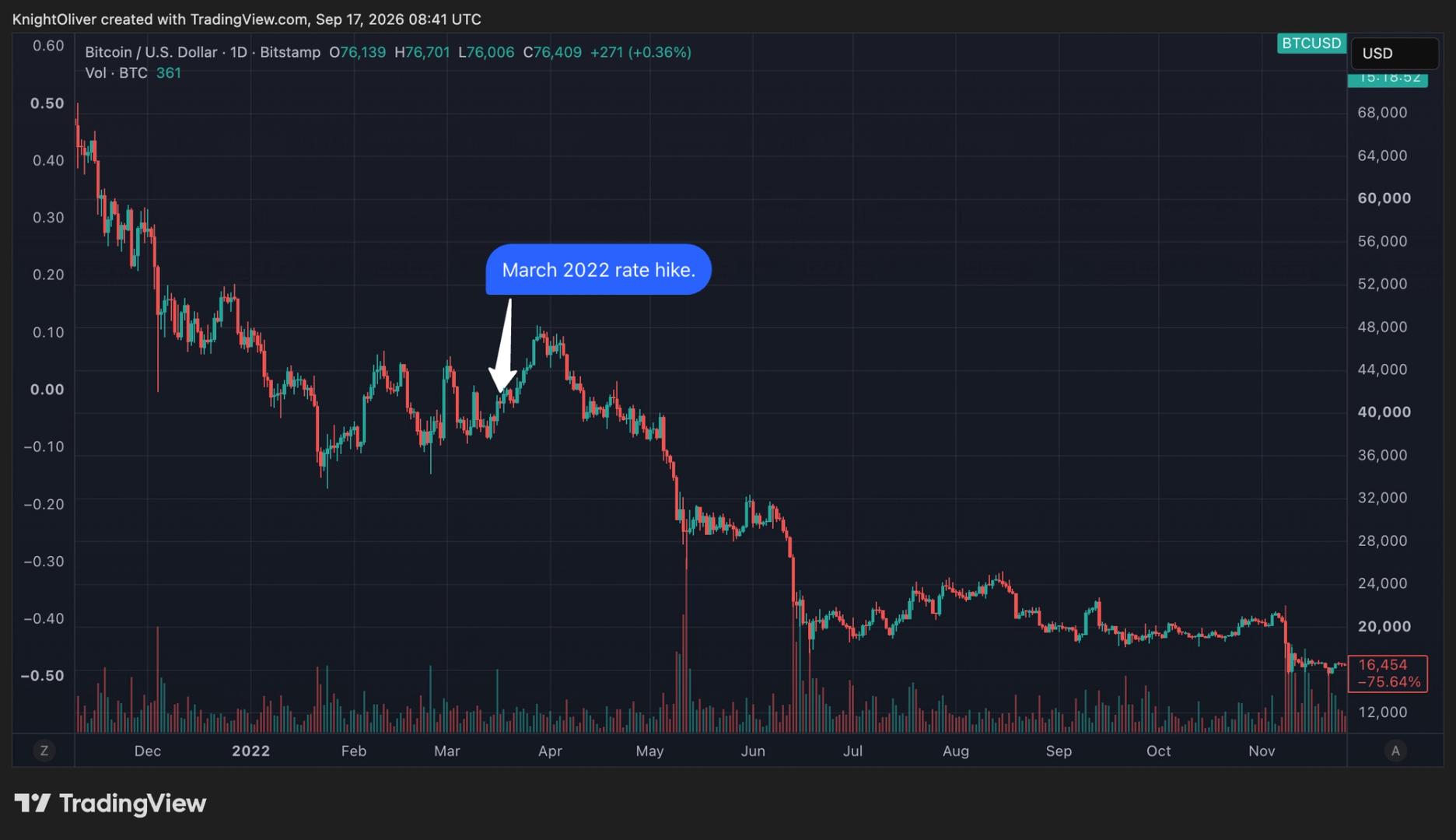
The Federal Reserve's unexpected return to rate hikes has sent tremors through cryptocurrency markets, with Bitcoin facing conditions eerily reminiscent of 2022's brutal downturn. As monetary policy tightens once again, analysts warn that risk assets including crypto could face renewed selling pressure similar to the market rout that saw BTC plunge below $16,000.
Bitcoin investors are confronting an uncomfortable sense of déjà vu as the Federal Reserve pivots back to interest rate increases, sparking concerns that the cryptocurrency could experience a repeat of 2022's devastating bear market.
The central bank's decision to resume its hawkish stance marks a significant shift in monetary policy, creating headwinds for risk assets across the board. Bitcoin, which has historically shown sensitivity to liquidity conditions and interest rate policy, now faces a familiar challenge that previously drove prices to multi-year lows.
During 2022's aggressive rate-hiking cycle, Bitcoin suffered one of its worst annual performances, declining approximately 65% as the Fed raised rates from near-zero to over 4% in a matter of months. The cryptocurrency fell from around $47,000 at the start of that year to below $16,000 by November, as tightening financial conditions drained liquidity from speculative assets.
Market analysts note several parallels between the current environment and that difficult period. Higher interest rates typically strengthen the dollar, reduce excess liquidity in financial markets, and make yield-bearing traditional assets more attractive relative to non-yielding cryptocurrencies like Bitcoin. These dynamics previously triggered significant capital rotation away from digital assets.
However, some crypto veterans argue that important differences exist. The cryptocurrency market infrastructure has matured considerably since 2022, with increased institutional adoption, spot Bitcoin ETFs now operational, and stronger regulatory frameworks emerging globally. These factors could potentially provide more stability during turbulent macro conditions.
The broader context also matters. If the Fed is raising rates to combat resurgent inflation, the long-term implications for Bitcoin's narrative as an inflation hedge could actually prove supportive, even if short-term price action remains volatile.
Traders are now closely watching key technical support levels while monitoring Fed communications for clues about the pace and duration of this new rate-hiking cycle. The coming weeks will prove critical in determining whether Bitcoin can weather this storm better than it did during 2022's market collapse, or if history is destined to repeat itself.
For now, caution prevails in crypto markets as investors brace for potential turbulence ahead.