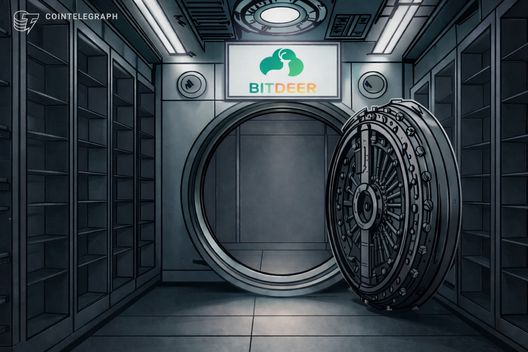
In a surprising move that contrasts sharply with industry trends, publicly-traded Bitcoin mining company Bitdeer has completely liquidated its corporate Bitcoin holdings, selling off 943 BTC from reserves along with all newly mined coins. The decision marks a stark departure from the popular corporate 'HODL' strategy embraced by competitors like Marathon Digital and Riot Platforms.
Bitcoin mining firm Bitdeer Technologies has made headlines by completely emptying its Bitcoin treasury, selling all 943 BTC from its corporate reserves alongside freshly mined coins. The move brings the Nasdaq-listed company's Bitcoin holdings to zero, representing a strategic pivot that runs counter to prevailing industry sentiment.
The liquidation comes at a time when many publicly-traded mining companies have adopted aggressive Bitcoin accumulation strategies, viewing their mined coins as long-term assets rather than immediately liquidatable inventory. Industry leaders like Marathon Digital Holdings and Riot Platforms have been steadily building their treasuries, betting on Bitcoin's future appreciation.
Bitdeer's decision to maintain zero Bitcoin reserves suggests a fundamentally different operational philosophy. Rather than speculating on Bitcoin's price trajectory, the company appears to be prioritizing immediate liquidity and operational cash flow. This approach may indicate a focus on funding expansion, covering operational expenses, or reducing debt obligations.
The timing of the sale is particularly noteworthy given Bitcoin's recent price volatility and the upcoming halving event that will reduce mining rewards. While some analysts might interpret the move as bearish, it could also reflect prudent financial management in an industry notorious for boom-and-bust cycles.
Mining operations face significant overhead costs including electricity, equipment maintenance, and facility expenses. For companies operating on tighter margins, converting Bitcoin to fiat currency immediately can provide crucial working capital, especially during periods of elevated energy costs or reduced mining profitability.
However, this strategy also means Bitdeer forfeits potential upside from Bitcoin price appreciation. If Bitcoin rallies significantly, shareholders might question whether maintaining zero reserves was the optimal strategy compared to peers who retained their mined coins.
The crypto mining sector remains divided on treasury management strategies. While HODL-focused miners attract investors seeking Bitcoin exposure with operational leverage, Bitdeer's approach may appeal to those preferring predictable revenue conversion and reduced balance sheet volatility.
As the industry matures, different treasury strategies will likely coexist, with each company's approach reflecting its unique capital structure, growth objectives, and risk tolerance. Bitdeer's complete liquidation represents one end of this strategic spectrum.