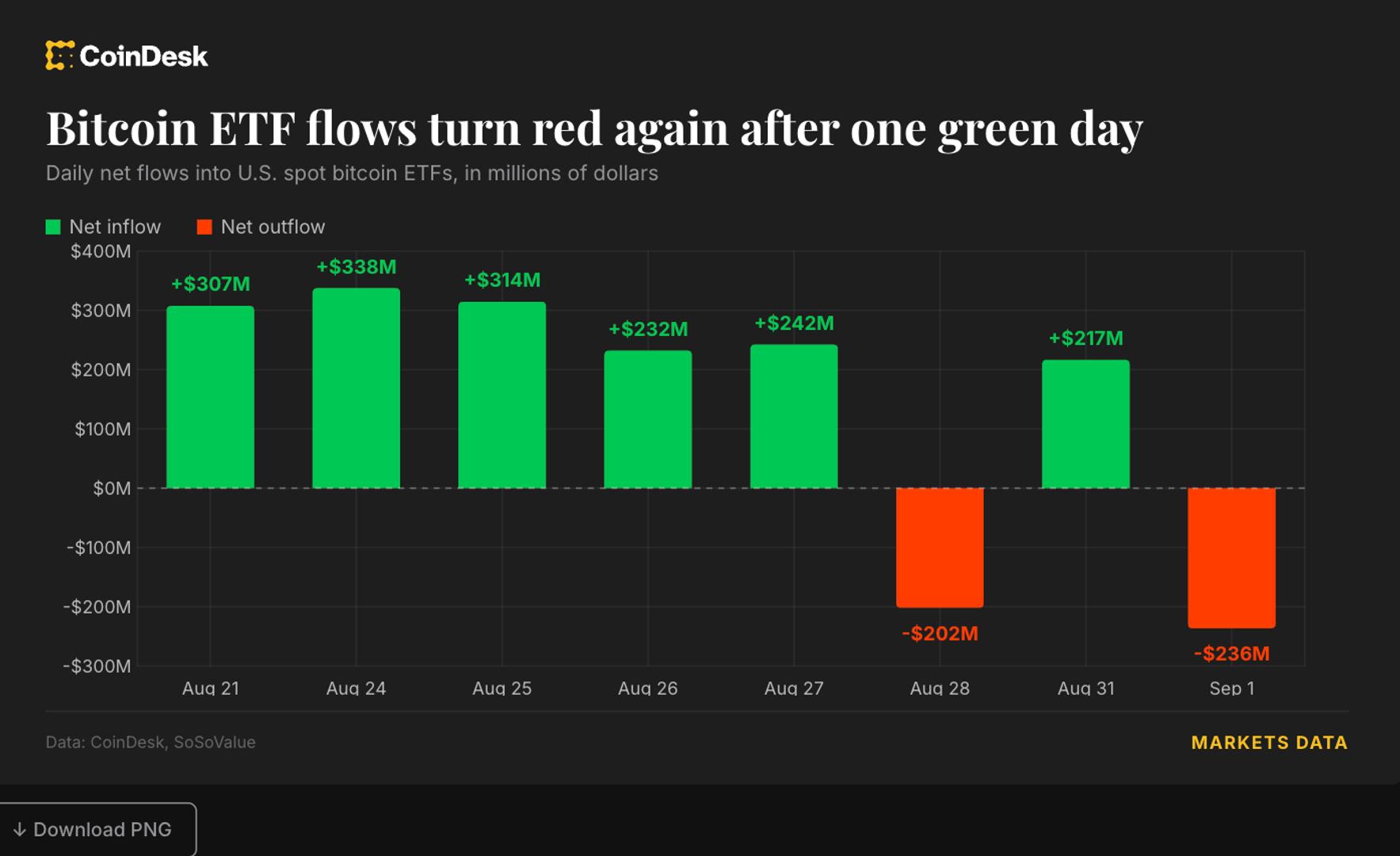
In a surprising reversal, BlackRock's IBIT bitcoin exchange-traded fund experienced a significant $236 million outflow, marking one of the largest single-day withdrawals since the product's launch. The dramatic shift in investor sentiment raises questions about the sustainability of institutional bitcoin demand amid broader market uncertainty.
BlackRock's iShares Bitcoin Trust (IBIT), once the crown jewel of the spot bitcoin ETF revolution, has recorded a substantial $236 million outflow, signaling a potential shift in institutional investor sentiment toward cryptocurrency exposure.
The outflow represents a notable departure from the strong inflows that characterized IBIT's early trading months. Since its January 2024 launch, BlackRock's bitcoin ETF had been widely regarded as the most successful of the eleven spot bitcoin ETFs approved by the Securities and Exchange Commission, consistently attracting billions in assets under management.
Market analysts suggest several factors may be contributing to the withdrawal. Broader macroeconomic concerns, including persistent inflation data and uncertainty surrounding Federal Reserve policy, have prompted many institutional investors to reassess their risk exposure across alternative asset classes. Bitcoin, despite its growing mainstream acceptance, remains a volatile asset that often faces redemption pressure during periods of market stress.
The timing of the outflow is particularly significant as it comes amid a broader consolidation phase in cryptocurrency markets. Bitcoin prices have experienced increased volatility in recent weeks, with technical indicators suggesting investor indecision about the asset's near-term direction.
However, cryptocurrency advocates caution against reading too much into single-day flows. ETF redemptions can reflect various factors, including portfolio rebalancing, tax considerations, or strategic shifts by large institutional holders, rather than a fundamental loss of confidence in bitcoin's long-term prospects.
BlackRock, the world's largest asset manager with over $10 trillion in assets under management, has not commented publicly on the outflow. The firm has previously emphasized its long-term commitment to digital asset products and the growing demand for regulated cryptocurrency exposure among institutional clients.
The bitcoin ETF landscape remains competitive, with products from Fidelity, ARK Invest, and Grayscale also vying for market share. Industry observers will be closely monitoring whether this outflow represents an isolated event or the beginning of a broader trend affecting institutional cryptocurrency adoption.
For now, the $236 million withdrawal serves as a reminder that even in the evolving world of regulated cryptocurrency products, investor sentiment can shift rapidly, and past performance offers no guarantee of continued inflows.