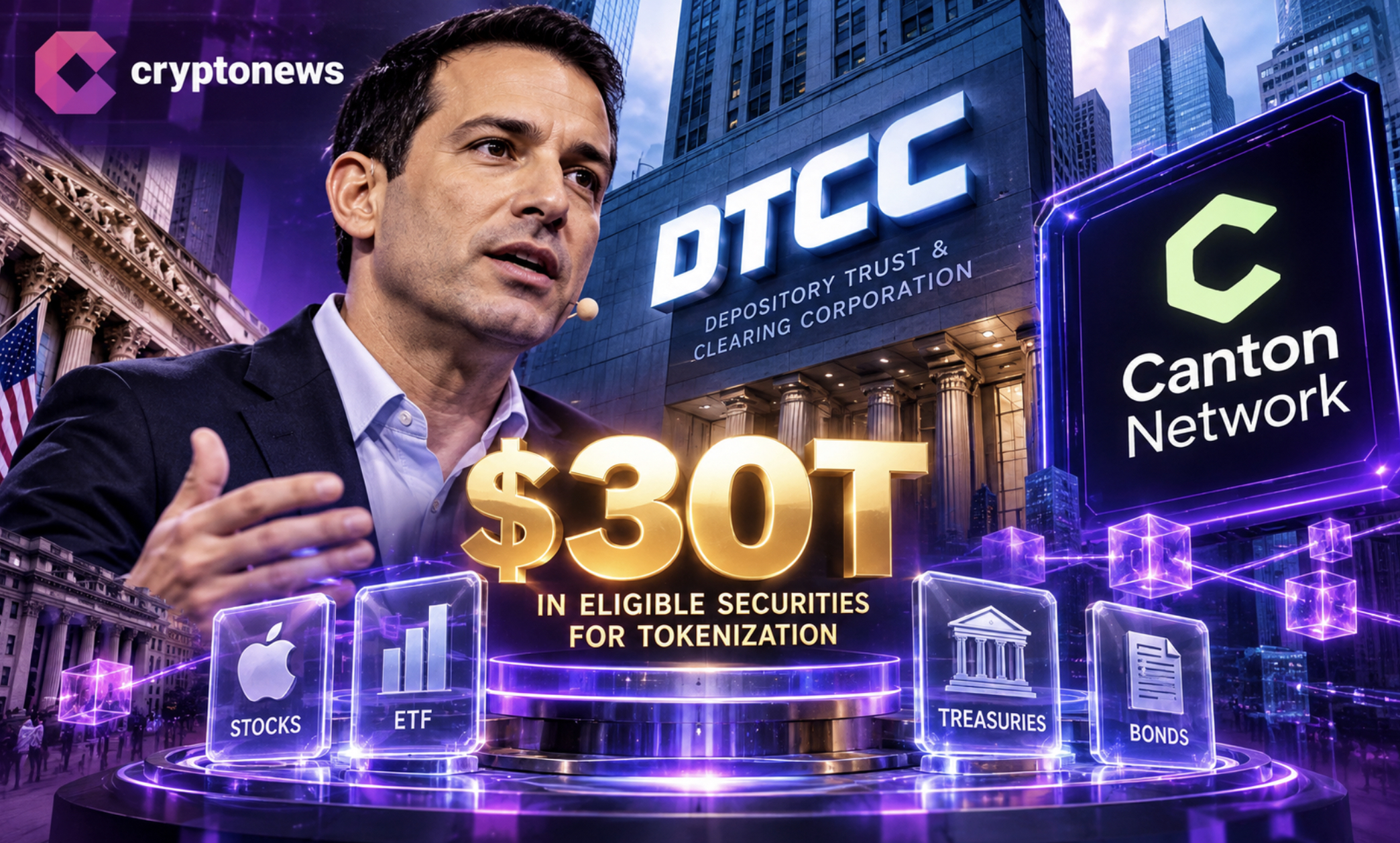
In a landmark development for institutional blockchain adoption, the Canton Network has partnered with the Depository Trust & Clearing Corporation (DTCC) to provide access to $30 trillion worth of eligible securities. This collaboration represents one of the most significant bridges between traditional finance and blockchain technology to date, potentially accelerating the tokenization of real-world assets across global markets.
The convergence of traditional finance and blockchain technology has reached a pivotal milestone as the Canton Network announces its integration with the Depository Trust & Clearing Corporation (DTCC), unlocking access to an unprecedented $30 trillion in eligible securities for blockchain-based tokenization.
The DTCC, which processes the majority of securities transactions in the United States, manages infrastructure critical to global financial markets. By partnering with Canton Network—a privacy-enabled blockchain platform designed for institutional use—the collaboration creates a regulated pathway for bringing traditional securities onto distributed ledger technology.
This development addresses one of the blockchain industry's most persistent challenges: bridging the gap between legacy financial systems and decentralized infrastructure. Rather than requiring a complete overhaul of existing systems, the Canton-DTCC integration allows institutions to maintain compliance and operational standards while leveraging blockchain's efficiency advantages.
Tokenization of securities offers several compelling benefits, including fractional ownership capabilities, 24/7 trading potential, reduced settlement times, and enhanced transparency. Traditional securities settlement can take days, while blockchain-based transactions can settle in minutes or even seconds, significantly reducing counterparty risk and capital requirements.
The Canton Network distinguishes itself through its privacy-focused architecture, which allows multiple parties to transact while maintaining data confidentiality—a critical requirement for institutional participants concerned about proprietary information and regulatory compliance. This design philosophy aligns with enterprise needs in ways that public blockchains often cannot accommodate.
Industry experts view this partnership as validation of blockchain technology's maturation beyond cryptocurrency speculation toward practical financial infrastructure. The involvement of the DTCC—a cornerstone institution of traditional finance—signals growing institutional confidence in distributed ledger technology's readiness for mission-critical applications.
While implementation timelines remain to be detailed, the collaboration represents significant progress toward a future where traditional and blockchain-based finance operate interoperably. As regulatory frameworks continue evolving and technological solutions address scalability concerns, partnerships like Canton-DTCC may become the template for mainstream blockchain adoption in financial services.
The $30 trillion figure underscores the transformative potential at stake, representing a substantial portion of global securities that could eventually flow through blockchain rails, fundamentally reshaping how financial assets are issued, traded, and settled worldwide.