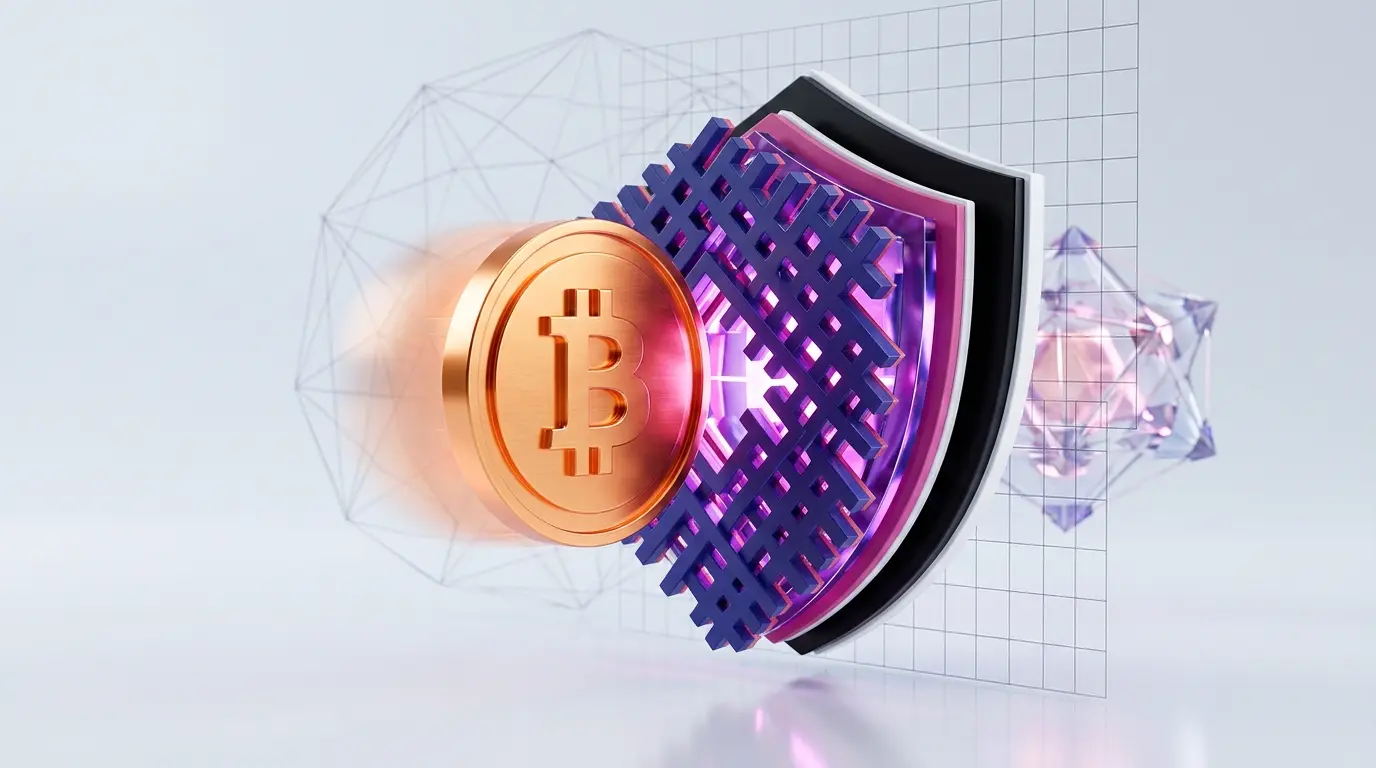
In a groundbreaking development for cryptocurrency security, StarkWare has completed the first quantum-resistant Bitcoin transaction directly on the mainnet. While the experimental workaround comes with significant costs and doesn't require consensus changes, it demonstrates a viable path forward as quantum computing threats loom on the horizon.
StarkWare, a leading blockchain technology firm, has achieved a significant milestone in cryptocurrency security by executing the first quantum-resistant Bitcoin transaction on the mainnet. This proof-of-concept demonstrates that Bitcoin can be protected against future quantum computing threats without requiring controversial changes to its core consensus rules.
The experimental transaction leverages advanced cryptographic techniques to shield Bitcoin from quantum computers, which experts predict could eventually break the elliptic curve cryptography currently securing the network. By utilizing zero-knowledge proof technology—StarkWare's specialty—the transaction creates a protective layer that would theoretically withstand attacks from quantum machines.
However, this quantum resistance comes at a steep price. The workaround is significantly more expensive than standard Bitcoin transactions, requiring substantially higher fees and greater computational resources. This cost factor makes it impractical for everyday use with current technology, positioning it more as an emergency contingency than an immediate solution.
The significance of this achievement extends beyond the technical demonstration. By proving that quantum-resistant transactions are possible without altering Bitcoin's fundamental protocol, StarkWare has provided the community with a crucial fallback option. This is particularly important given Bitcoin's resistance to consensus changes and the contentious nature of protocol upgrades within the community.
Quantum computing remains years away from posing an actual threat to Bitcoin, but the cryptocurrency community has grown increasingly concerned about preparedness. Experts estimate that sufficiently powerful quantum computers capable of breaking Bitcoin's cryptography could emerge within the next 10-20 years, though predictions vary widely.
StarkWare's approach uses validity proofs to verify transactions without exposing vulnerable cryptographic signatures to potential quantum attacks. While the current implementation is costly and complex, it establishes a working framework that could be optimized as technology advances.
This development adds to growing efforts across the blockchain industry to future-proof digital assets against quantum threats. Other projects are exploring post-quantum cryptographic algorithms and protocol upgrades, but StarkWare's mainnet demonstration proves that solutions can work within Bitcoin's existing framework—a crucial consideration for the world's most conservative cryptocurrency network.
As quantum computing continues to advance, innovations like StarkWare's quantum-resistant transaction provide essential insurance for Bitcoin's long-term security and viability.